-
Tickled About Pink in the Garden - The Springhouse BLOG#4
Posted on September 26th, 2009 5 commentsBy Richard J. Weber, Garden ExplorerTickled About Pink in the Garden!
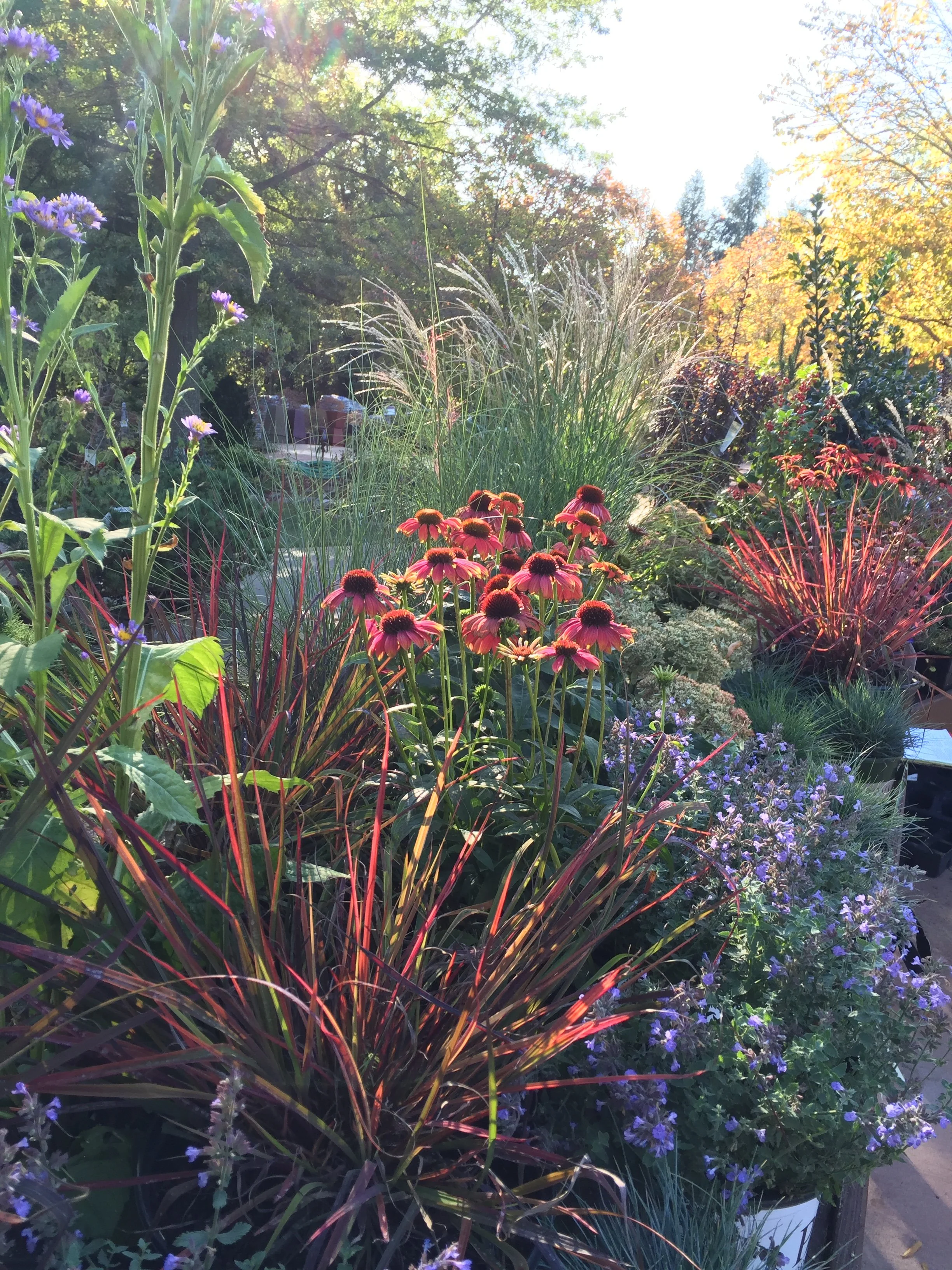
Looking out the back windows of the Landscape Office, I’m happy to see the return of a little color to the Hillside Shade Garden. Through the summer, it’s been mostly green out there on the shady slope. But starting in late August I noticed some wispy Pink Anemones starting to brighten up the garden. Sure, the anemones are aggressive, but after trying in vain for so long to get them going, I’m not going to disparage them now that they are taking over everything in their path. They sure do add a cheery splash of color to our wooded site.On the other end of the garden, the hardy begonias (Begonia grandis) are also showing lots of color. This is an old favorite of mine that surprises so many people when they learn there’s actually a perennial begonia. This is a classic pass-along plant, because they don’t really like to be in pots for long. We also have a patch of begonias along the path in the Walking Shrub Border behind the Sun Mounds, which started blooming about a month earlier and are 3’ tall (the tallest I’ve ever seen)! In combination with Gold Dust Aucuba, it is quite a memorable sight.
Adding a little more color to our back garden is Aster divaricatus (White Wood Aster). They started blooming in late July and are still blooming 2 months later. This Kentucky native is one of the few plants I brought from my childhood home and have had them now for probably 35 years. That’s what I call a long-lived perennial! I used to go up to a farm near Stanton, Kentucky with Paul Kress, a friend of my father’s. Mr. Kress would take me out rock hunting and in the process I would always find a few plants he’d let me dig up from his woods. This aster never did all that well in my garden on Cross Keys Road. I planted it under a huge old honeysuckle bush that I had limbed up to make a shade garden. It was always very dry under there, and although I’d get some nice rough textured heart shaped leaves every year and a few white flowers each fall, it was nothing spectacular. When I started the gardens at Springhouse, I brought a piece here and planted it behind the office. It kind of sat there for the first few years like it did in my other garden, but then it took off and started multiplying! The asters must really like their new home and they reward me with lots of great foliage and bigger and more plentiful flowers. Curiously, the flower color has changed from white to pale pinkish-purple and are blooming longer than I ever remember. I guess this is the right plant in the right place!
There is another pink late summer bloomer that is one of my favorites — Hot Lips Turtlehead. Maybe it’s because I’m really a kid at heart and I can really imagine this flower as a turtle’s head (although I’ve never seen a pink turtle!) Turtlehead (or Chelone if you prefer Latin names) really likes it wet. Native to stream sides and low lying areas, I had just the place to plant one – in our stream bed just before the water disappears under the patio by our office. The dark green glossy leaves look healthy all season and the interesting flowers bloom for over a month. This year, some white smart weed and orange jewel weed have popped up to keep the Turtlehead company. This little trio is growing so well in the soggy soil - actually too well with all the extra rain this year - so I’ve had to do a little pruning so the Turtlehead doesn’t get overtaken and covered up by the rambunctious companions.
They say timing is everything and these plants are no exception. The color provided by these late summer flowers comes at a most appreciated time. Their subtle beauty will soon be eclipsed by all the more vibrant and riotous colors of fall, which are just around the corner.
-
Hanging In There -The Springhouse BLOG#3
Posted on September 11th, 2009 No commentsHanging In There!
The Adventures of R. J. Weber, Garden Explorer…

Oriole nest by the driveway
I found an oriole nest on the ground a couple of weeks ago. It was last year’s nest and it looked like a jumble of twine on the side of our driveway by the office. Anyone walking by might think it trash to be discarded, and at first I thought it was, but this is turning out to be an annual occurrence. I guess I have four or five oriole nests from the same number of years. I don’t ever see them hanging in the big elm that stretches out over our driveway while the orioles are nesting in them, but I usually notice them after the leaves have fallen and the trees are bare.
It is only then that the interesting pouch of the nylon fibers appears as it sways in the winter wind. The nest hangs on for the entire winter and most of the spring and summer and then as it occurred this week – detaches from its home base and plummets to the ground, to be added to our collection. I saw the orioles this spring when they returned from their over winter grounds somewhere in either Mexico, Central
America or northern South America and I watched them to try to detect where their 2009 home might be located, but to no avail. I scour the ends of the pendulous elm branches, looking for the latest of the orioles amazing creations, but I suppose I’ll just have to wait until the leaves drop again and the cold winter’s wind reveals the location of this year’s brood. 
As you drive the back roads of Central Kentucky, keep your eyes peeled for the oriole nests in branches hanging over the narrow two lane roadways. I often can spot the oriole pouches as I’m zipping through the countryside. I don’t know why the orioles choose to build their nests so often just above a stretch of hard asphalt - not necessarily a soft or friendly landing spot for young orioles as they try to leave their nests. Maybe they just want to keep in touch with their human admirers and reveal themselves to those with keen vision to discover as they pass by. To learn more about orioles and how they construct their nests, check out this link - http://www.learner.org/jnorth/tm/oriole/BuildNest.html

Post your comments here!
We’d love to hear your wildlife
and/or gardening stories.